Projects

Design in Virtual Reality (VR) Racing Games: Engaging the User’s Sense of Speed
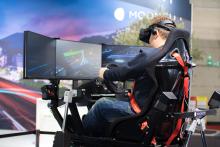
The rapid development of realistic simulations in racing games has led to the undermining of a user’s sense of speed, reducing their immersion. This effect is more apparent in Virtual Reality (VR) racing games where users need this immersion to have a comfortable experience. If users are not immersed in the VR racing experience, they will be less engaged as a result of cybersickness. This project aims to develop a framework to assist game developers, and the research field of game design, on understanding how to engage a user’s sense of speed in a VR racing game.


Combatting Postnatal Depression: Exploring The Role of Serious Games in New Parent Support

This study seeks to utilise digital and serious game technologies, along with early detection innovations, to assist perinatal infant mental health (PIMH) clinicians in supporting parents in their third trimester of pregnancy, including both birthing and non-birthing parents. The goal is to address the stigma surrounding postnatal depression (PND), which can become a barrier to seeking timely professional assessment and treatment, and there are limited interventions for those in the pregnancy phase.

Personalised Play: Examining the Availability and Implementation of Configurable Accessibility Features in Commercial Games

Games represent the largest entertainment industry by far, attracting interest in ensuring equal access to the medium. Effective accessibility for commercial, entertainment-focused games is best achieved through offering deep, nuanced configuration of the gameplay experience, allowing players to engage more closely to the game’s intended challenges. Many accessibility technologies have been developed and are shown to be effective, but players report these features are inconsistently incorporated into commercial games.

Video Game Accessibility: Visualising the Spatialisation of Game Audio for the Hard of Hearing

Video gaming is one of the most popular pastimes enjoyed by a large variety of people around the world. As more people are getting involved with video gaming, the video games industry too must grow to help maintain their reach towards the varied and diverse members of their community, such as individuals with disabilities. These individuals require accessibility solutions to help them enjoy video games as their disability can affect the way they play, or in some cases make games unplayable.

Bringing Visual Accessibility into VR for Low Vision Users

Low vision is the moderate to severe impairment of the eye that cannot be fixed with eyewear or surgery. This impairment leads to difficulties in doing recreational activities, like playing video games. Although visual accessibility can help ease this issue, it is not widespread in the video game industry where many popular video games lack basic accessibility features. Accessibility is even more unapparent in the area of virtual reality games where visual accessibilities are near non-existent.

Demonstrating Environmental Sustainability on a Global Scale for Open-world Sandbox Video Games

In the field of Serious Games, Virtual Game-Based Learning through educational video games has already begun to be adopted in various classroom lessons. Research has found that game-based learning improves attention retention and critical thinking skills. Aside from using entertainment as a tool for encouraging learning, video games can provide a virtual space for players to freely experiment and demonstrate actions and scenarios that may normally be difficult to replicate in the real world. The prevalent and effective type of video game used for this purpose is Sandbox games.

An analytical framework for better access within Virtual Reality

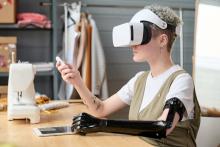
As Virtual Reality is becoming more mainstream access for disabled people becomes more important, especially those with movement-related disabilities. People with movement-related disabilities are often combined with other forms of physical disabilities and thus are often under-reported here in Australia, This proves to be a problem as movement-related disabilities require specific care. This project will provide a framework to be used to design software and tools that may be used to provide better access to mobility-related disabled people in Virtual Reality.

It’s More Than Emulation - Towards a Proactive Approach to Games Preservation

The games industry has been notoriously neglectful towards the act of preservation since the establishment of the medium, often leaving acts of archival to the eleventh hour. Whilst some of the larger studios, such Electronic Arts have adopted a more inclusive archival process, the damage has already been done, and the consequences are beginning starting to loom over the industry. Around 87% of all games released prior to the advent of digital storefronts are commercially unavailable - a worse survival rate than the legendarily ephemeral American Silent Film era of motion pictures.

Adaptive Digital Twin Systems for Long-Distance Relationships: Enhancing Intergenerational Companionship Between Parents and Their Adult Children

Long-Distance Relationships (LDRs) involve individuals separated geographically due to factors like work, school, or travel. While much research has focused on romantic relationships or grandparent-grandchild bonds, less attention has been given to the emotional dynamics between parents and their adult children, particularly as global mobility and longer lifespans increase. Maintaining strong emotional connections across distances is crucial for emotional well-being, with communication tools like social media, email, and mobile phones helping bridge the gap.

Pages